Bring People In
Recognize differences without reducing individuals to categories, assigning collective blame, or excluding perspectives.
 PROJECT SPICES™
IDEAS™
What if your inclusion initiatives brought
more people into the conversation
instead of pushing them away?
Project SPICES™ IDEAS offers a different
approach to Inclusion, Diversity, Equity,
Accessibility, and Sustainability—
one that recognizes every person's humanity,
addresses organizational barriers, and
turns understanding into practical change.
No group needs to be diminished for another to be valued.
Trusted by leaders across federal agencies, enterprise & mission-critical organizations







Organizations can invest in training, policies, committees, and initiatives yet still encounter barriers in their everyday decisions, leadership practices, workplace relationships, and systems.
The challenge is not simply whether employees know the terminology. It's whether the organization can translate its intentions into relevant practices, accountability, and continuous improvement.
Training introduces concepts, but employees may lack opportunities or support to apply them.
Organizational goals and actual practices can operate in different directions.
Separate activities may not address the interconnected people, practices, and systems influencing outcomes.
Improvements are difficult to sustain without leadership ownership, measurement, and ongoing adjustment.
Employees may disengage when discussions
become accusatory, overly polarized,
or disconnected from the realities
of their workplace.
IDEAS approaches these challenges by
recognizing human complexity,
encouraging meaningful participation,
and connecting learning to organizational
responsibility and practice.
Recognize differences without reducing individuals to categories, assigning collective blame, or excluding perspectives.
Examine experiences, assumptions, interpersonal dynamics, and organizational barriers with curiosity and accountability.
Apply insights to leadership behaviors, organizational practices, access, communication, and sustainable improvement.
True inclusion doesn't require choosing which people matter. It requires valuing people while addressing the practices and barriers that influence their opportunities.
Discuss Your Organization →IDEAS brings Inclusion, Diversity, Equity, Accessibility, and Sustainability into a connected approach to people, leadership, organizational culture, and operating practices.
Creating conditions for meaningful participation, voice, involvement, and belonging.
Recognizing differences in people, identities, backgrounds, perspectives, and experiences.
Examining barriers, opportunities, and organizational practices that influence fair access and treatment.
Identifying and reducing barriers to participation, information, tools, environments, and opportunities.
Embedding effective practices into leadership, systems, culture, and continuous improvement.
We apply the Project SPICES™ human-development framework and Re+Calibration™ methodology to implement IDEAS in ways that consider both people and the systems influencing them.
The broader human-development theory, framework, process, program, and coaching methodology examines interconnected dimensions of human development and their relationship with personal, interpersonal, and environmental systems.
It helps us look beyond isolated behaviors to understand developmental patterns, capabilities, needs, and contextual influences.
Re+Calibration™ helps recognize patterns, understand alignment and misalignment, identify needed adjustments, and develop pathways for meaningful change.
The methodology applies to people, relationships, practices, and systems.
IDEAS translates these foundations into organizational consulting, strategy, training, coaching, leadership development, and tailored implementation.
The five IDEAS elements become part of the organization's actual practices, rather than separate activities.
IDEAS is how we apply an integrated human-development and change approach to organizational inclusion, diversity, equity, accessibility, and sustainability.
IDEAS connects human development, organizational change, and practical implementation. It is designed to move beyond isolated awareness activities and address what happens within people, relationships, leadership, and organizational systems.
IDEAS recognizes every person's humanity and experiences. It encourages people across backgrounds, identities, and perspectives to participate in meaningful organizational change.
Project SPICES™ examines interconnected dimensions of human development. This provides a broader foundation for understanding behavior, capabilities, relationships, and environmental influences.
Re+Calibration™ helps examine patterns and misalignment so IDEAS initiatives can be connected to workplace practices, leadership responsibilities, and meaningful organizational adjustments.
Consulting, strategic advisory, training, coaching, and implementation support can be combined according to your organization's needs, circumstances, and goals.
From leadership development to organizational implementation, we tailor engagements around your challenges, priorities, and desired outcomes.
Assess organizational needs, identify barriers, review systems and workplace practices, and develop strategies for greater alignment and effectiveness.
Discuss consulting needs →Support organizational decision-making, leadership priorities, stakeholder considerations, and the practical integration of IDEAS into existing systems.
Discuss advisory services →Strengthen leadership capabilities, communication, accountability, decision-making, inclusive practices, and the ability to lead meaningful change.
Discuss leadership programs →Support teams and leaders in navigating interpersonal challenges, developing capabilities, strengthening collaboration, and improving group effectiveness.
Discuss team coaching →Customized workshops, facilitated discussions, and applied learning focused on IDEAS, workplace culture, communication, leadership, and organizational practices.
Explore workshop topics →Translate strategies into action through implementation planning, learning reinforcement, evaluation, leadership support, and continuous improvement.
Discuss implementation →Explore practical training topics that address leadership, workplace behaviors, inclusion, organizational barriers, and implementation.

A workshop can introduce a topic, develop practical skills, or become part of a broader IDEAS engagement. Content and delivery can be tailored to your organization's priorities.
Understand why initiatives stall and how to connect strategy with practice.
Move beyond recognizing bias to understanding behavior and applying meaningful workplace practices.
Develop the leadership skills needed to navigate difficult conversations, competing perspectives, and change.
Examine how workplace practices, culture, communication, and leadership shape people's experiences.
Develop a workshop or series based on your organization's specific circumstances and goals.
IDEAS can be applied across leadership, workforce development, culture, and operating practices. The priority is to identify what is relevant to your organization.
Develop leader awareness, communication, decision-making, accountability, and behaviors that support meaningful participation.
Examine workplace experiences, trust, norms, participation, and the practices influencing employee connection and engagement.
Build practical skills for navigating disagreement, interpersonal challenges, difficult conversations, and cross-functional relationships.
Identify participation barriers and review developmental opportunities, workplace processes, communication channels, and accessibility.
Connect learning, managerial capability, development pathways, and applied practices to organizational priorities.
Examine gaps between stated values, leadership decisions, employee experiences, operating systems, and actual practices.
Whether your organization is beginning to explore IDEAS or needs deeper leadership and culture transformation, we develop an appropriate scope around your goals.
 PATHWAY 01 · FOUNDATION
Establish a shared understanding of IDEAS, examine organizational priorities, and identify practical opportunities to align existing efforts.
PATHWAY 02 · LEADERSHIP
Develop leadership capabilities and practices needed to integrate IDEAS into daily decisions, team relationships, communication, and organizational direction.
 PATHWAY 03 · CULTURE
Examine workplace culture, leadership, systems, and operating practices to support a more integrated and sustainable organizational approach.
All pathways are customized. Final deliverables, format, duration, fees, and scope are determined during engagement planning.
An IDEAS engagement begins with understanding your organization's circumstances and desired outcomes. The resulting scope and implementation plan are tailored to those needs.
Clarify objectives, organizational context, existing efforts, stakeholders, developmental needs, and implementation barriers.
Identify priorities and develop a customized approach integrating the appropriate IDEAS elements and services.
Deliver the agreed consulting, training, coaching, advisory, or organizational development activities.
Review relevant indicators, feedback, application, and opportunities to improve practices or reinforce learning.
Methods, measures, timelines, responsibilities, and deliverables are defined according to the engagement—not assumed in advance.
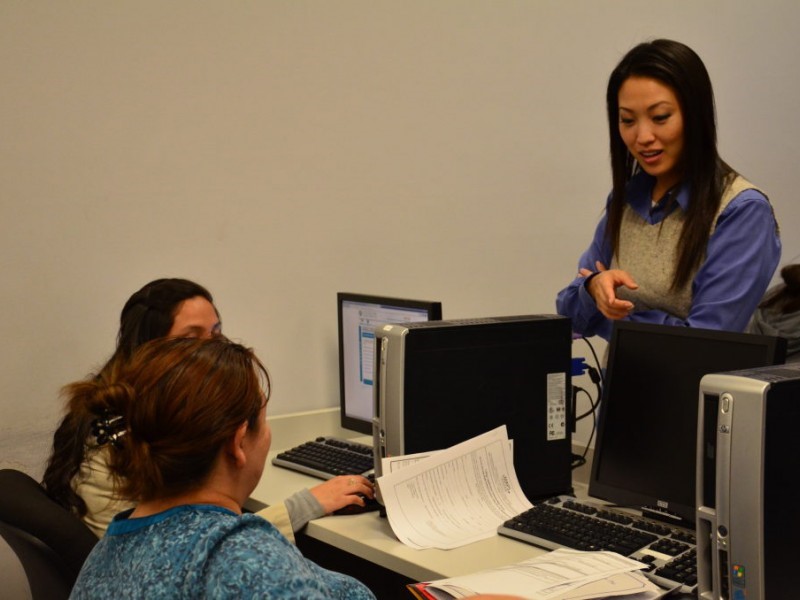
Dr. Sarai Koo, Ph.D., is the founder of Project SPICES™ and the developer of its human-development and related methodologies.
Her work spans education, leadership, workforce development, coaching, training, program design, and organizational development.
The IDEAS approach brings these developmental perspectives to organizational challenges—connecting individual capabilities and experiences with leadership practices, organizational structures, and the environments in which people work.
Dr. Sarai Koo, Ph.D. · Founder, Project SPICES™
Some of the most difficult workplace conversations involve disagreement, defensiveness, and resistance. How those conversations are approached can affect people's willingness to participate.
During an engagement with a contentious group, Dr. Sarai Koo observed strong interest in IDEAS among White male participants from the majority group. Their response illustrated the potential value of an approach that explicitly includes them in the conversation rather than treating them as outsiders.
The experience helped reinforce the importance of creating conditions in which people can participate, examine differences, and address organizational challenges constructively.
People who may resist one approach to inclusion can become more open to participating when they understand that inclusion includes them, too.
An insight illustrated by an IDEAS engagement described by Dr. Sarai Koo. This is a summary of her observation, not a verbatim participant quotation or a controlled comparative study.
The lesson: meaningful inclusion can invite broader participation while still addressing real differences, inequities, and organizational barriers.
IDEAS includes training but is not limited to it. It uses Project SPICES™ and Re+Calibration™ to connect human development and organizational practices with Inclusion, Diversity, Equity, Accessibility, and Sustainability.
IDEAS applies an integrated human-development and organizational change perspective. Rather than focusing solely on awareness, engagements can address leadership, practices, systems, application, and sustained improvement.
Yes. Proposed scope, services, format, deliverables, and fees are based on the organization's identified needs and agreed engagement terms.
Yes. A focused leadership engagement may be an appropriate starting point. It may also identify opportunities for broader organizational work.
IDEAS can be applied across different organizational settings. Suitability, scope, and requirements are discussed during the consultation process.
Appropriate measures depend on the engagement. They may include defined learning objectives, participant feedback, observed application, organizational indicators, and agreed implementation milestones.
Delivery arrangements are discussed based on the requested services, participant needs, location, and scope of work.
Whether you're experiencing resistance
to workplace initiatives, leadership
challenges, employee disengagement,
or organizational misalignment,
the next step is understanding
what's actually happening.
Discover how Project SPICES™ IDEAS
can help you bring people into the
conversation, develop leadership
capabilities, and implement
meaningful organizational change.
Share your organization's priorities and the challenges you're seeking to address. The inquiry currently opens the general Project SPICES contact page until the dedicated IDEAS consultation form is connected.